Battery Survey & Comparison Quote
Tell us about your home, your energy setup, and your goals. We will match you to the right battery and arrange a no-obligation survey.
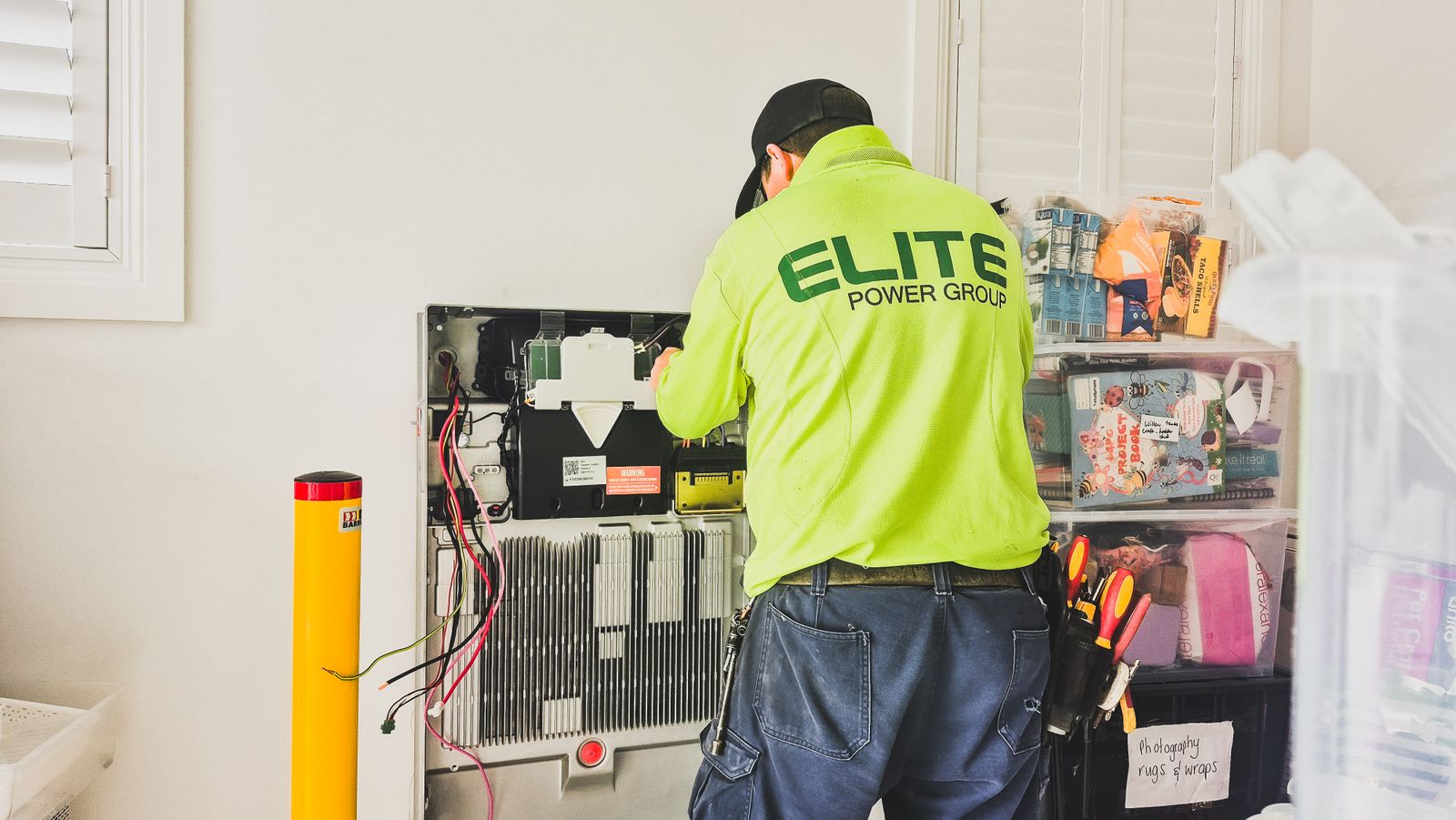
What Does a Home Battery Survey Check?
The surveyor inspects your consumer unit (fuse box) to check whether it has enough capacity for a battery connection or whether an upgrade is needed. They look at where the battery can be safely wall-mounted — typically a garage, utility room or exterior wall — and measure cable runs between that location and your consumer unit. The longer the cable run, the more labour is involved.
If you are also considering solar, the surveyor checks your roof orientation, available space, and whether there are shading issues from chimneys, trees or neighbouring buildings. South-facing roofs generate the most solar energy in Scotland, but east-west roofs are still viable with the right inverter setup.
The surveyor also tests Wi-Fi signal at the proposed mounting location, because the battery needs a connection for app monitoring and smart tariff integration. They confirm which Distribution Network Operator covers your area (SSEN for northern Scotland, SP Energy Networks for central and southern Scotland) and handle DNO notification as part of the installation process.
For tenement flats and listed buildings, the surveyor assesses whether mounting is practical and advises on any permissions you may need. There is no obligation to proceed after the survey — you receive the findings and a written quote, and you decide in your own time.
What Happens After the Survey?
We Call You
No-Obligation Property Survey
Personalised Comparison Quote
Installation
Battery Surveys for Scottish Property Types
For detached and semi-detached houses, the surveyor typically identifies a garage or utility room wall for mounting. Cable runs are usually straightforward, and the consumer unit is often in the same area. These properties typically have the most options.
For tenement flats in Glasgow and Edinburgh, the surveyor checks whether there is a suitable communal or private space for the battery. Mounting inside a flat is sometimes possible, but the surveyor needs to assess fire safety, structural loading and access. Listed building consent may be required for exterior mounting in conservation areas.
For rural and island properties, the surveyor pays particular attention to grid resilience. Properties in SSEN areas, especially the west coast and islands, experience more frequent power cuts during winter storms. Tesla Powerwall 3 with Storm Watch is particularly relevant here: it monitors Met Office severe weather warnings and automatically pre-charges to 100% before a storm arrives. No other UK home battery offers this feature.
For farms and rural estates with outbuildings, there is often more flexibility on mounting location and the option to combine battery storage with solar PV, EV charging or heat pumps in one integrated system. We install through MCS-certified partners across all property types.
Complete the Form Below
Tell us about your home and energy setup. We will call you within 2 hours to arrange your no-obligation survey.
Your Survey Questions Answered
Ready for Your No-Obligation Comparison?
Get a personalised side-by-side battery comparison for your Scottish home. No obligation.